-

Varicose Veins vs. Spider Veins: What’s the Difference and When Should You Seek Treatment?
-
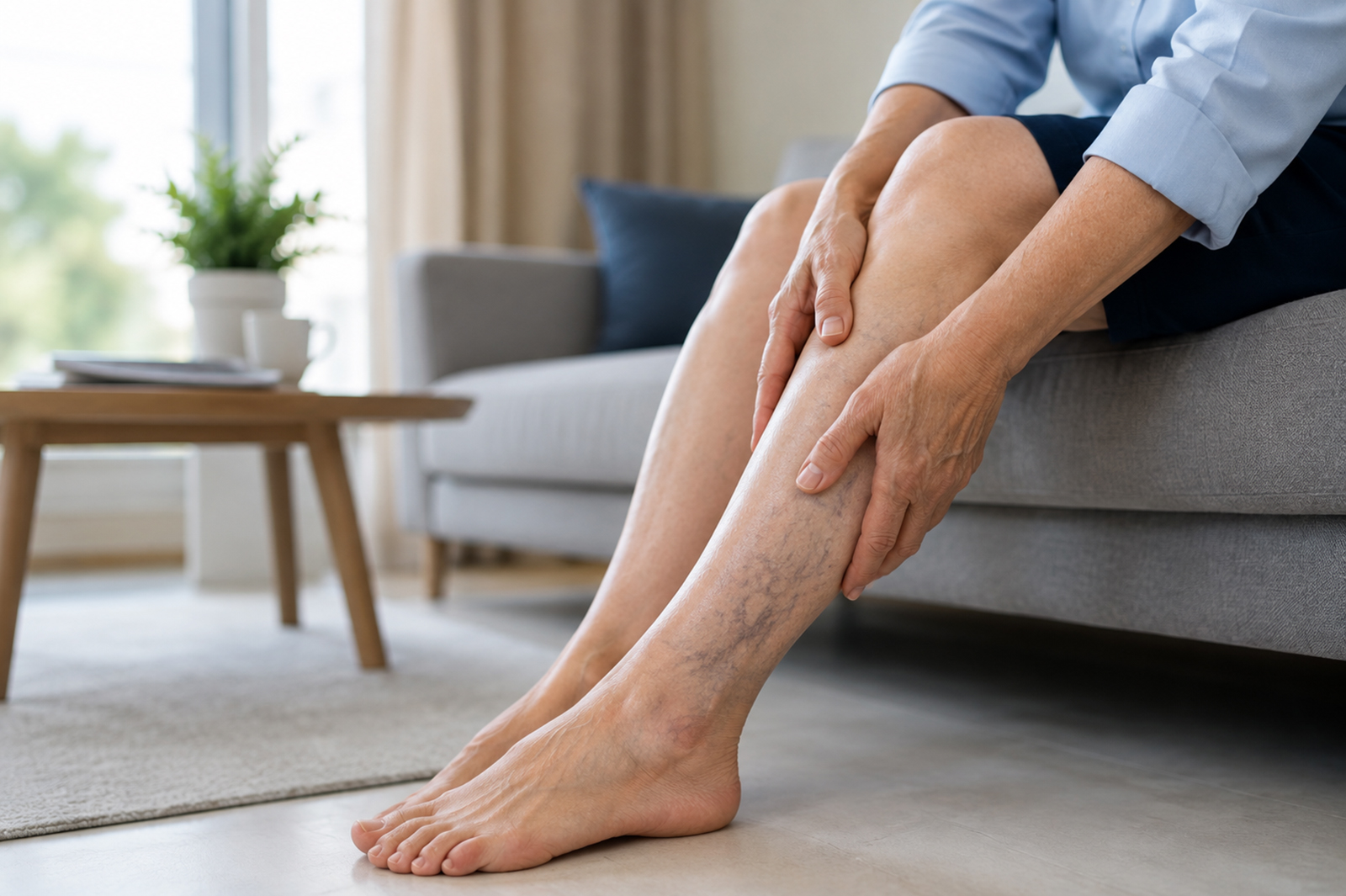




For many people, noticing map-like purple networks or bulging blue cords on their legs is a common, yet poorly understood experience. Because these structural changes manifest on the surface of the skin, they are frequently written off as purely cosmetic issues—an inevitable part of aging, pregnancy, or standing for long hours.
However, changes in your leg veins are often the outward signs of an underlying vascular condition. According to Dr. Adil Rizvi, Medical Director and Cardiothoracic & Vascular Surgeon at RAK Hospital, drawing a clear distinction between spider veins and varicose veins is critical to determining whether you are dealing with a superficial cosmetic concern or a progressive vascular disease that requires medical evaluation.
The Underlying Mechanics – Why Veins Fail
To understand the difference between these two conditions, it helps to look at how blood travels through your lower limbs. While your arteries carry oxygen-rich blood from your heart down to your toes, your veins carry deoxygenated blood back up against the pull of gravity.
The Role of One-Way Valves
To prevent blood from flowing backward, your veins are equipped with microscopic, one-way valves. When you walk, your calf muscles contract, acting as a natural pump to squeeze blood upward, and these valves snap shut behind it.
When these delicate valves become weakened, damaged, or stretched, they fail to close completely. This causes blood to flow backward and pool inside the vessel—a physiological state known as Venous Insufficiency.
The Path of Least Resistance
As blood pools continuously, it builds pressure within the localized vascular network. Depending on the depth and size of the affected blood vessels, this internal pressure manifests on the surface of your skin as either spider veins or varicose veins.
Spider Veins vs. Varicose Veins – The Structural Breakdown
While both conditions stem from poor venous circulation, they differ significantly in their depth, size, symptoms, and potential health risks.
Spider Veins (Telangiectasias)
Spider veins are small, delicate blood vessels resting just beneath the surface of the skin. They typically appear as thin, web-like networks of red, purple, or blue lines.
Varicose Veins
Varicose veins develop deeper within the subcutaneous tissues. When larger, main superficial veins fail, they twist, swell, and bulge outward, lifting the skin.
Clinical Insight: “Spider veins are like small puddles on a street, whereas varicose veins represent a backed-up main drainage system,” notes Dr. Adil Rizvi. “While spider veins rarely progress into serious health threats, unmanaged varicose veins point to a deeper vascular issue that can impact your overall circulatory health.”
When to Transition from Lifestyle Tweaks to Medical Treatment
Not every vein issue requires immediate surgery. In its early stages, mild venous pooling can be managed effectively through conservative lifestyle adjustments. However, knowing when to seek specialist care is vital to preventing complications.
Actionable Conservative Management
| Strategy | Implementation Technique | Expected Clinical Benefit |
| Graduated Compression | Wearing medical-grade compression stockings daily. | Applies external pressure to help push blood back up toward the heart. |
| Vascular Elevation | Propping legs above heart level for 15 minutes, 3 times a day. | Uses gravity to drain pooled fluids and reduce lower limb pressure. |
| Movement Intervals | Flexing ankles or walking for 5 minutes every hour of sitting/standing. | Activates the calf muscle pump to stimulate circulation. |
Red Flags That Require Specialist Evaluation
You should move past home management and schedule a clinical diagnostic workup with a vascular specialist if you experience any of the following symptoms:
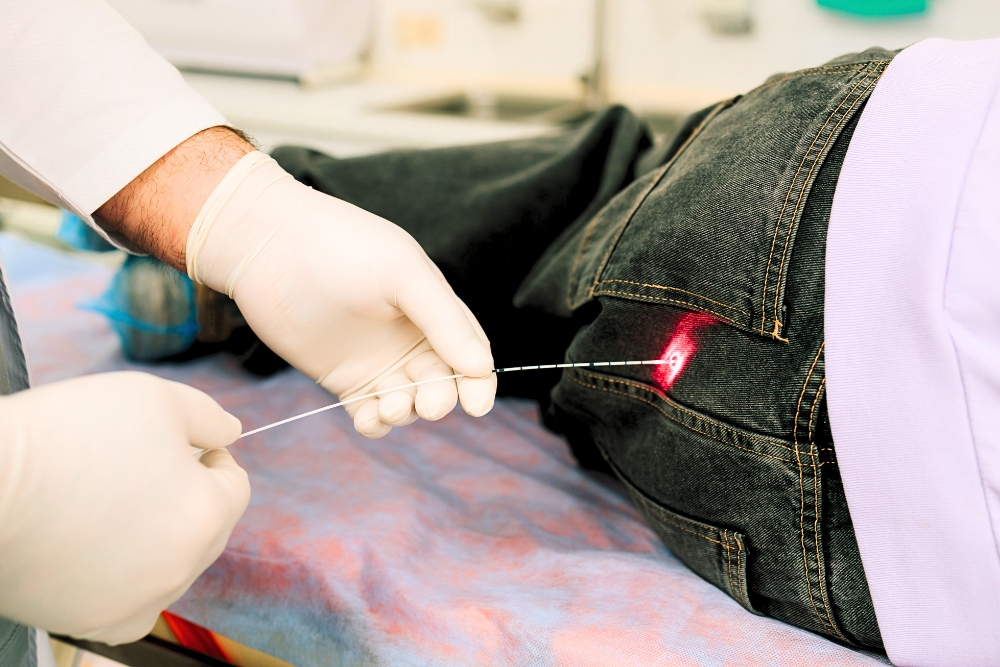
“At RAK Hospital, we use advanced Duplex Venous Ultrasound to map your lower leg circulation in real time. This non-invasive test allows our vascular team to pinpoint exactly which valves are leaking, enabling us to treat the root cause of your condition using modern, minimally invasive techniques like endovenous laser ablation or sclerotherapy, ensuring minimal downtime and an easy return to a pain-free life.”
Frequently Asked Questions (FAQs)
Q1: Can crossing my legs cause varicose or spider veins to form?
A: No, crossing your legs does not cause these vein issues. This is a common misconception. While crossing your legs can temporarily restrict surface blood flow and aggravate existing pressure if you sit that way for hours, the underlying cause of vein failure is genetic predisposition, valve weakness, pregnancy, or extended periods of standing still.
Q2: What is a Duplex Ultrasound, and why is it needed before treating varicose veins?
A: A Duplex Ultrasound is a completely painless diagnostic imaging test that maps the structure of your veins and measures the speed and direction of your blood flow. A vascular surgeon like Dr. Adil Rizvi uses this map to see if blood is flowing backward into your deep veins, which is necessary to plan a treatment that targets the root cause of the issue rather than just treating the surface symptoms.
Q3: Are minimally invasive treatments for varicose veins painful, and do they require long bed rest?
A: Modern treatments—such as Endovenous Laser Ablation (EVLA) or Sclerotherapy—are performed on an outpatient basis under local anesthesia, causing minimal discomfort. Patients are typically encouraged to stand up and walk immediately after the session, and most return to their normal daily activities within 24 to 48 hours.
Q4: If a varicose vein is closed or removed during treatment, where does the blood go?
A: When a damaged, malfunctioning superficial vein is closed or removed, your body automatically reroutes the blood flow to adjacent, healthy deep veins. Because the treated vein was already failing and pooling stagnant blood, closing it actually improves your overall leg circulation and reduces tissue swelling.