-

Asthma in the UAE: How Desert Climate & Indoor Air Quality Affect Your Lungs
-
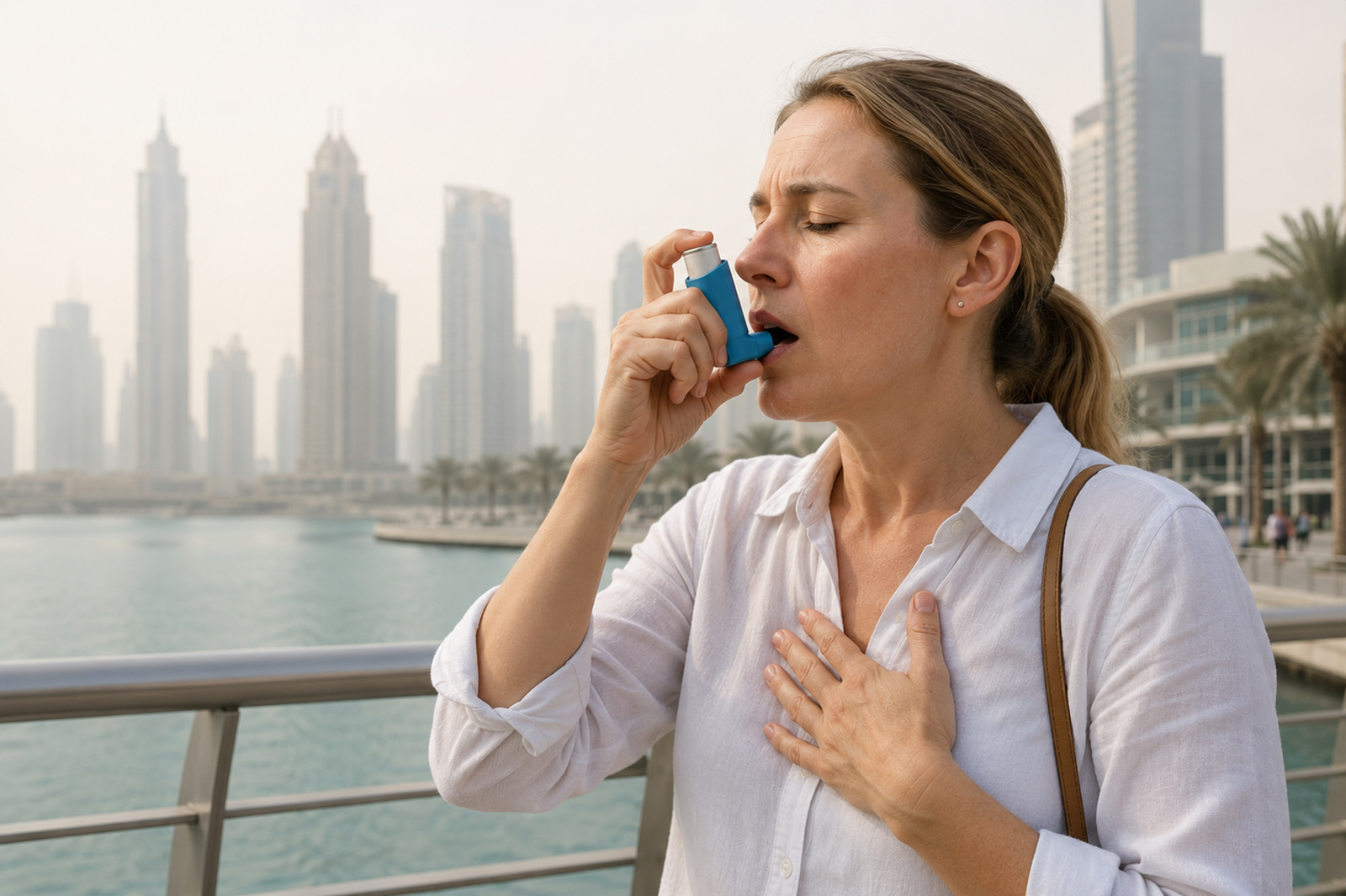




Living in the UAE offers a vibrant lifestyle, but the unique environmental landscape presents distinct challenges for respiratory health. For individuals living with asthma, navigating the intersection of a harsh desert climate and modern, enclosed indoor environments requires a proactive approach.
According to our pulmonologist, Dr. Prabhu at RAK Hospital, managing asthma effectively in the UAE means understanding how external atmospheric changes and indoor air pollutants collaborate to trigger airway inflammation.
The External Challenge – The Desert Climate and Your Airways
The UAE’s climate is characterized by extreme heat, shifting winds, and vast desert expanses. While the outdoor environment is beautiful, it acts as a primary catalyst for asthma exacerbations.
Desert dust storms carry high concentrations of particulate matter (PM), including fine sand grains, silica, and airborne minerals. When inhaled, larger particles trap in the upper airways, but fine particulate matter penetrates deep into the lungs. This triggers an immediate immune response, causing:
During peak summer, residents frequently transition from outdoor temperatures exceeding 40°C into indoor environments aggressively cooled to 18°C–20°C.
Clinical Insight: This sudden, drastic temperature change acts as a physical shock to the respiratory tract. Rapidly inhaling cold, dry air causes the airways to contract instantly—a phenomenon known as cold-air-induced bronchoconstriction.
High humidity levels, particularly in coastal regions, trap ambient pollutants closer to the ground. This dense air holds higher concentrations of ground-level ozone and seasonal pollens, making breathing more labor-intensive for individuals with sensitive or hyper-reactive airways.
The Internal Threat – The Hidden Realities of Indoor Air Quality
Because the extreme outdoor heat forces residents to spend up to 90% of their time indoors during summer, the indoor environment becomes the primary battleground for asthma control.
Air conditioning is an absolute necessity in the UAE. However, centralized HVAC systems that are not meticulously maintained quickly become breeding grounds for asthma triggers. Moisture pooling within AC ducts fosters the growth of mold spores, while filters accumulate dust mites and pet dander. When the system activates, these allergens are forcefully recirculated throughout living spaces.
Modern indoor spaces are saturated with chemical triggers that frequently escape notice. These include:
Even in an airtight apartment, microscopic dust mites thrive in mattresses, carpets, and curtains, feeding on shed skin cells. The combination of indoor humidity and consistent ambient temperature creates an optimal microclimate for these allergens to multiply.
The RAK Hospital Guide to Comprehensive Asthma Control
To achieve optimal respiratory health, a dual strategy targeting both environmental modifications and medical management is essential. Specialists at RAK Hospital advocate for a structured approach to safeguard your lungs.
Strategic Environmental Control Measures
| Focus Area | Actionable Prevention Strategy | Expected Health Benefit |
| HVAC Care | Deep-clean AC ducts annually; wash or replace filters every 2 to 4 weeks. | Eliminates recirculated mold spores and dust mites. |
| Air Filtration | Deploy Medical-Grade HEPA air purifiers in bedrooms and main living areas. | Captures up to 99.97% of airborne particulate matter and allergens. |
| Humidity Control | Maintain indoor humidity levels strictly between 30% and 50%. | Inhibits mold propagation and dust mite survival. |
| Lifestyle Choices | Limit the burning of Bakhoor indoors; avoid smoking; opt for fragrance-free cleaners. | Minimizes chemical airway irritation and toxic VOC exposure. |
Medical Intervention and Diagnostics
Environmental adjustments alone are sometimes insufficient. When symptoms persist, advanced medical evaluation is required to tailor an effective management plan.
By actively controlling your indoor environment and partnering with medical specialists for targeted diagnostic monitoring, you can successfully mitigate the unique environmental challenges of the UAE and breathe easy year-round.
A: This is primarily caused by cold-air-induced bronchoconstriction. Transitioning quickly from the extreme outdoor summer heat into a heavily air-conditioned indoor environment forces your airways to inhale cold, dry air rapidly. This sudden temperature shock causes the smooth muscles around your airways to spasm and contract, triggering immediate asthma symptoms like wheezing and shortness of breath.
A: To effectively control indoor allergens, AC filters should be washed or replaced every 2 to 4 weeks. Additionally, a professional deep-cleaning of the entire HVAC ductwork should be conducted at least once a year to eliminate hidden mold spores, accumulated desert dust, and dust mite colonies that recirculate through your living spaces.
A: Yes. Traditional incense like Bakhoor and heavy perfumes release high concentrations of fine particulate matter and volatile organic compounds (VOCs). These chemical irritants immediately inflame the hyper-reactive airways of an asthma patient, making incense a common but frequently overlooked household asthma trigger in the UAE.
A: You should consult a respiratory specialist if you rely on your rescue/reliever inhaler more than twice a week, wake up at night due to coughing or wheezing, or find that dust storms consistently disrupt your daily activities. Advanced diagnostic testing, such as a Pulmonary Function Test (PFT) at RAK Hospital, can precisely measure your lung function and help tailor a personalized Asthma Action Plan.